- Published: 19.05.2026.
Final conference of ‘Implementing the Barnahus Model in Croatia’ project held
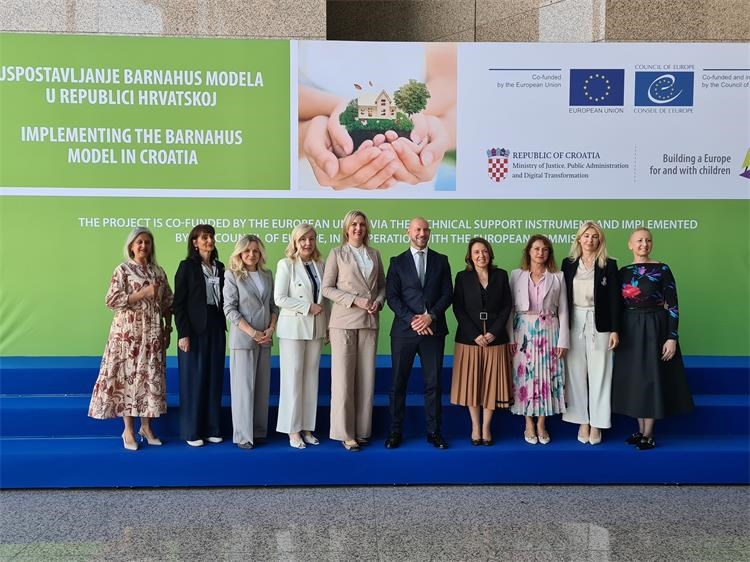
The project, which officially started in September 2023 and runs until June 2026, aims to establish the first Children's House at national level according to the leading European model of protecting the rights and interests of child victims and witnesses of violence or abuse
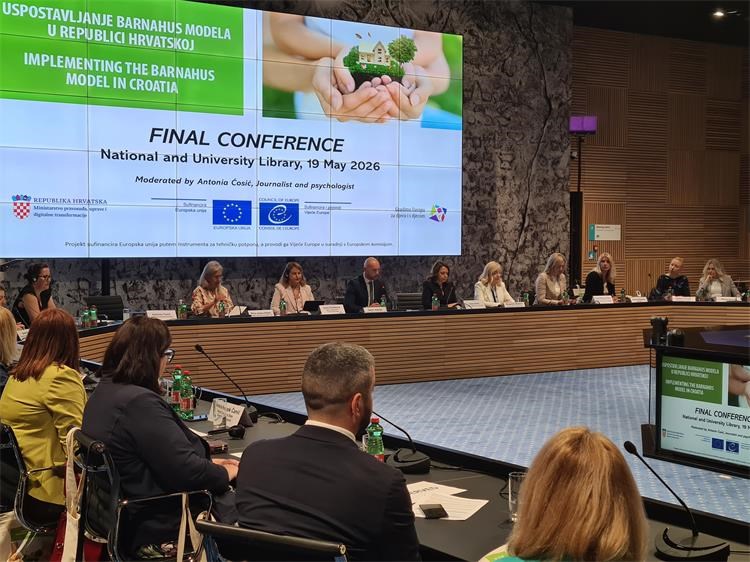
Today, the National and University Library in Zagreb hosted the final conference of the joint project of the European Union and the Council of Europe entitled ‘Implementing the Barnahus Model in Croatia’.‘The Government of the Republic of Croatia has recognised the Barnahus model as an example of good practice in treating child victims and witnesses of sexual abuse and exploitation offences in a safe environment’, said Minister Damir Habijan.
He also pointed out that the establishment of the Children's House was included in strategic documents and measures of of the National Plan for the Suppression of Sexual Violence and Sexual Harassment 2022-2027.
‘The main objective of Barnahus is to prevent the retraumatization and secondary victimisation of children by providing all the relevant services under one roof, while ensuring that their testimony may be used as evidence in criminal proceedings, primarily in a way that avoids repeated questioning of children’, the Minister clarified.
This project, which officially started in September 2023 and runs until June 2026, aims to establish the first Children's House at national level according to the leading European model of protecting the rights and interests of child victims and witnesses of violence or abuse.
The main beneficiary of the project is the Ministry of Justice, Public Administration and Digital Transformation. The project is co-financed by the European Union through the Technical Support Instrument and implemented by the Council of Europe in cooperation with the European Commission. The total budget of the project is 666,503 EUR.
One of the key events of the conference was the ceremnony of signing the Memorandum of Understanding for Implementing the Barnahus Model in Croatia, which was signed by the Minister of Health, Assoc. Prof. Dr. Irena Hrstić, MD, State Secretary at the Ministry of Labour, Pension System, Family and Social Policy Margareta Mađerić, State Secretary at the Ministry of Science, Education and Youth Zrinka Mužinić Bikić, Director of the Croatian Institute for Social Work Tatjana Štritof, Director of the Judicial Academy Kristina Bekavac, Director of the Academy of Social Welfare Marija Barilić and President of the Croatian Psychological Chamber Andreja Bogdan.
The signing of this document marks the formalization of multidisciplinary and inter-agency cooperation between judicial, social and medical institutions, which is the basis of the functioning of the Barnahus model, which envisages the provision of comprehensive services for the child and the family under one roof in order to avoid the retraumatisation of children.
During the project, significant analytical and strategic results were achieved. Following the preparation of initial reports and study visits to Slovenia and Finland, domestic and international experts produced three key documents: The Roadmap including a Cost Structure Analysis for the Establishment of the Children's House, the Report on Procedures and Protocols with a Memorandum of Understanding, and a Survey of Perceptions of Child Sexual Abuse in Croatia, conducted by the IPSOS Agency.
In the final phase of the project, guidelines on spatial and organisational coordination were prepared and a draft proposal for the Barnahus (Children's House) Act was drafted.
As part of strengthening the capacities of experts, the Council of Europe HELP course on the protection of children from sexual exploitation and abuse was adapted and implemented, and was successfully completed by two groups of legal and non-legal experts, who were ceremonially awarded certificates at today’s conference.
In his speech, Minister Habijan thanked the international experts Saga Brodersen and Gabriella Kärnekull Wolfe, who shared their personal experiences from Sweden at the conference, and stressed the importance of adapting this model to the Croatian legal system.
‘Given that Barnahus is a model that allows adaptation to the specificities of each national legal order, this feature makes it an ideal model for the protection of child victims and witnesses of serious crimes of a sexual nature in the territory of the Republic of Croatia, which can be adapted to all our specificities and challenges in this area’, said the Minister.
With the completion of this project, the work on the implementation of the Children's House in Croatia will not be suspended. The Ministry of Justice, Public Administration and Digital Transformation has ensured further co-financing of the establishment of the Children's House on the territory of Croatia through the Norwegian Financial Mechanism, which will enable work on infrastructure requirements and the full operational application of the model.
‘The strength of our entire society is reflected precisely in the way we provide protection to the most vulnerable members, which is our permanent and unquestionable obligation in order to achieve a system based on the rule of law’, Minister Habijan pointed out at the end of his address.
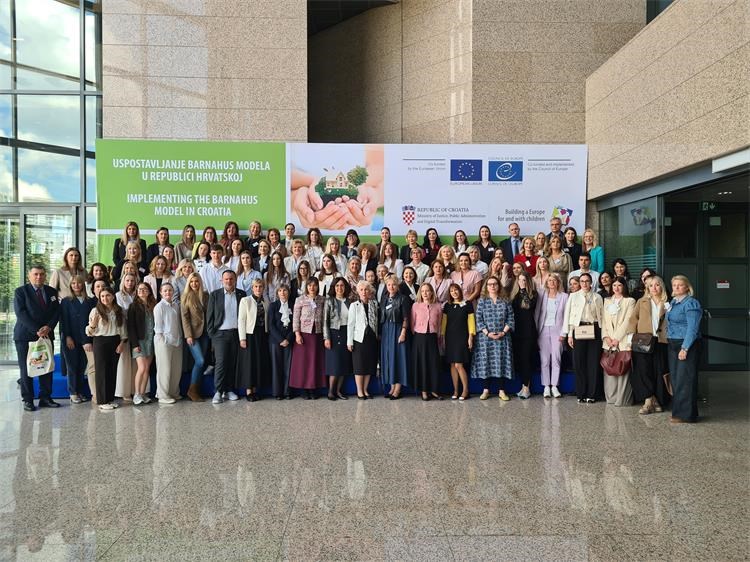
In addition to representatives of the Ministry of Justice, Public Administration and Digital Transformation, the conference was attended by representatives of the Ministry of Labour, Pension System, Family and Social Policy, the Ministry of Science, Education and Youth, the Office of the Ombudsperson, the European Commission, the Council of Europe and numerous domestic and foreign experts in the field of justice and protection of children's rights.