- Published: 26.08.2026.
Final conference of Erasmus+ project on VR application in prison and probation system
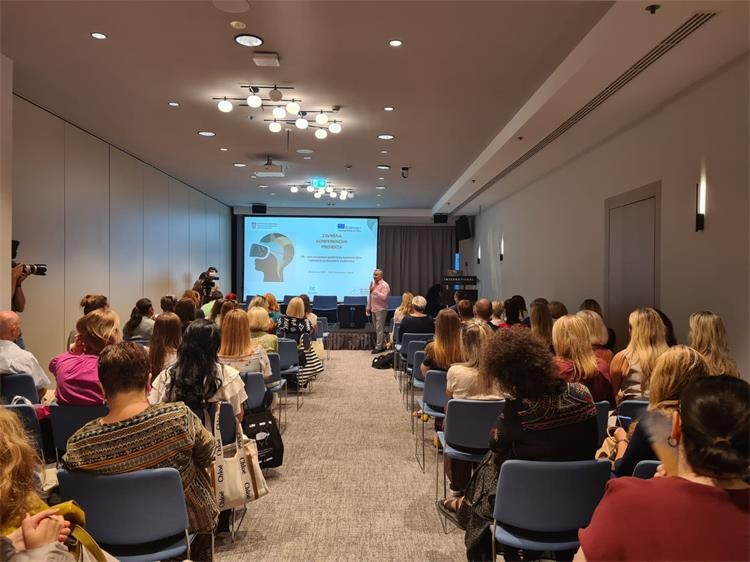
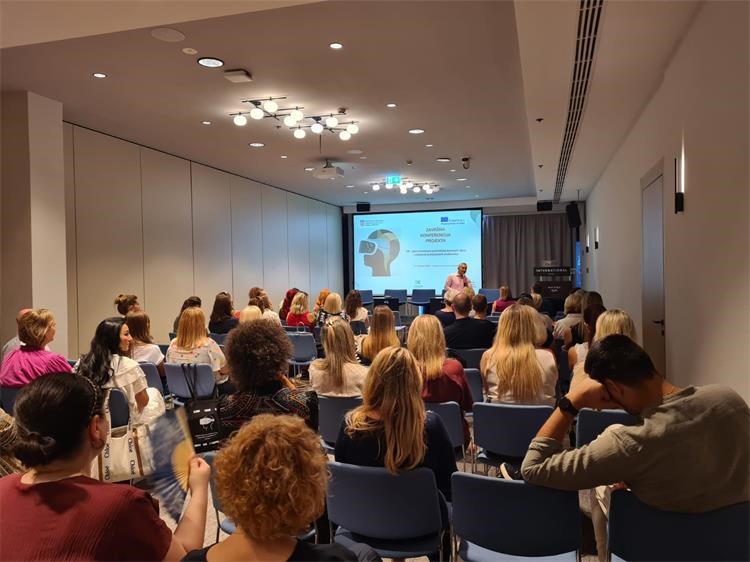
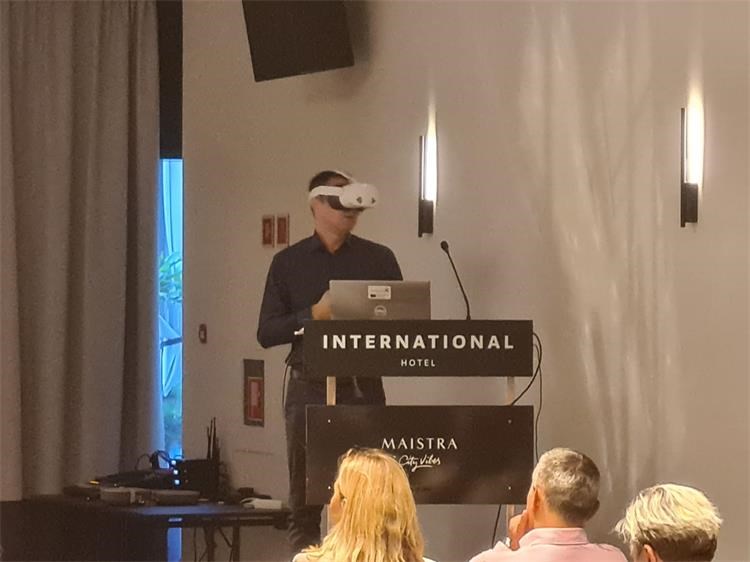
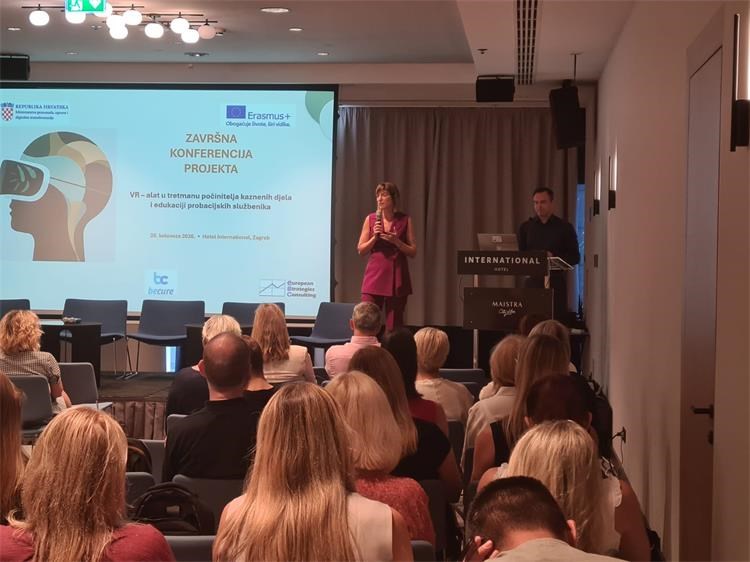
The final conference of the Erasmus+ project ‘Virtual reality - a tool in the treatment of criminal offenders and training of probation officers’ was held at Hotel International, Zagreb, today, organised by the Ministry of Justice, Public Administration and Digital Transformation
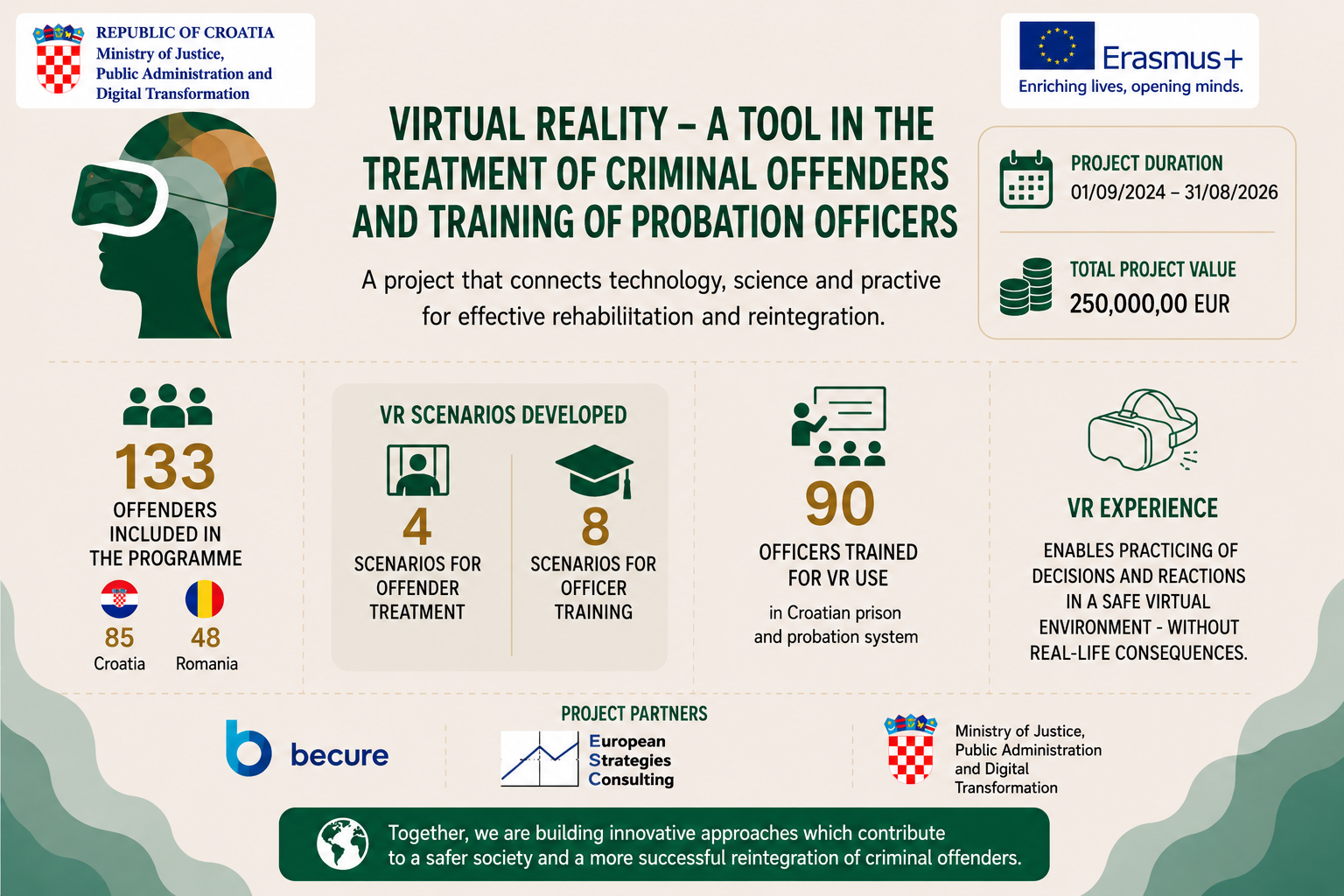
The project is implemented from 1 September 2024 to 31 August 2026, and is fully financed through the Erasmus+ programme, with a budget of 250,000 euros.The project beneficiary is the Ministry of Justice, Public Administration and Digital Transformation of the Republic of Croatia, along with international partners - Becure from Germany, which is in charge of VR content development, and ESC Romania for professional and scientific support under the leadership of Prof. Dr. Ioan Durnescu.
This project builds on the previous successful VR project that was awarded the European Commission's Innovative Teaching Award EITA 2025 in 2025.
Four VR scenarios have been developed for offender rehabilitation, which are focused on problem-solving and decision-making in a safe environment, including financial management, family and workplace conflicts and problematic traffic situations.
During the implementation of the project, 133 offenders from Croatia (85) and Romania (48) participated in the VR programme, with the use of the tool continuing actively.
The results of participant evaluation show extremely high acceptance, with 89.4% of participants positively assessing the comprehensibility of the activity and more than 72% stating that experience has helped them to better understand the consequences of their actions and the impact of their behaviour on others.
Experts have confirmed a statistically significant decrease in negative focus on the problem and a decrease in aggressive and controlling behavior among the participants.
In parallel, eight VR scenarios for the training of probation officers were developed, covering core treatment skills such as motivational interviewing, prosocial modeling and cognitive-behavioral interventions.
The VR training application was completed by 90 prison and probation officers in Croatia, with 23 VR sets distributed on the field.
Participants have rated the usefulness of the scenarios with a high average score of 4.81 out of 5, with more than 90% of participants pointing out that VR contributes to a better understanding of the content and that this type of training is significantly more engaging than traditional formats.
It was pointed out that VR does not replace experts and existing rehabilitation methods, but serves as an extremely valuable additional tool that ensures sustainability and innovation in the judicial system.