- Published: 12.05.2026.
Conference on Implementation of OECD Anti-Bribery Convention held in Zagreb
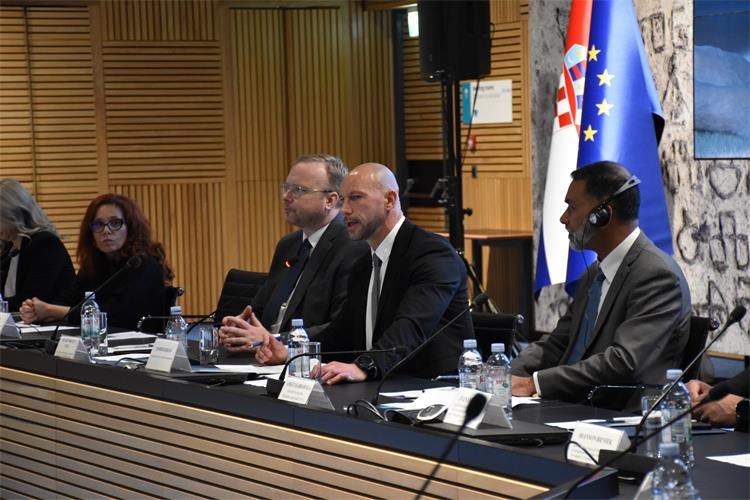
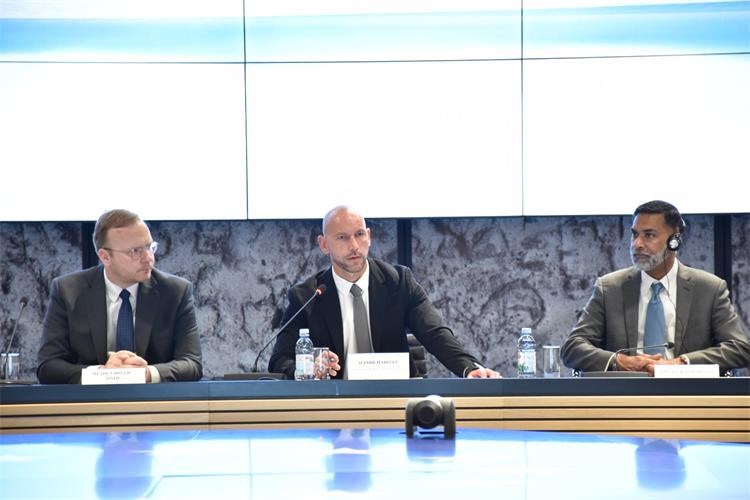
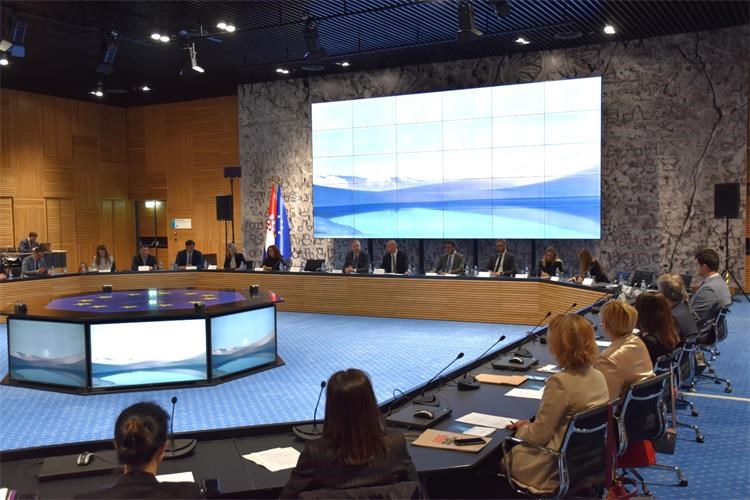
The Ministry of Justice, Public Administration and Digital Transformation in cooperation with the United States Embassy organised an expert conference aimed at countering foreign bribery and strengthening business integrity standards
An expert conference entitled ‘OECD Convention against Bribery in Practice: Corporate Governance, Enforcement and Market Confidence in Croatia’ held in Zagreb was attended by numerous experts from the public and private sectors.The main objective of the conference was to raise awareness of the fight against foreign bribery and to strengthen the capacity of all relevant stakeholders to apply international standards of business integrity.
Opening the conference, Minister Habijan particularly welcomed the cooperation with US partners and stressed that the international exchange of experience in this area was not a mere formality, but a real prerequisite for effectively countering bribery in cross-border business operations.
In his speech, Minister Habijan warned that corruption in international business not only undermines trust in institutions, but also directly affects competition, business decisions and the predictability of the business environment.
He said responsibility could not be solely on state bodies, explaining that it was also largely on companies, i.e. on the way they assess risks, make decisions and set internal standards.
‘The implementation of the OECD Convention must not only remain at the level of regulations and formal commitments, but must also be reflected in concrete procedures, compliance systems, internal controls and day-to-day business decisions’, the Minister said.
By acceding to this Convention and participating in the work of the OECD Working Group, Croatia further reaffirmed its commitment to the highest standards, which Minister Habijan assessed as crucial in the process of joining the OECD that had begun in 2022.
He recalled the significant efforts made to harmonise the legislative framework, highlighting the Anti-Corruption Strategy 2030 and the new Action Plan 2025-2027 adopted in May last year.
The Minister stressed that the priorities were the development of compliance systems in the private sector, anti-money laundering trainings and campaigns to strengthen integrity in companies. As important reform steps, the Minister highlighted the Act on the Protection of Persons Who Report Irregularities, which was further improved in late 2025, and the Lobbying Act, which entered into force in October 2024.
These laws, together with the Act on the Prevention of Conflicts of Interest, form a framework that increases transparency and creates a more stable business environment.
'Transparency, codes of ethics and mechanisms for reporting irregularities are not only formal requirements, but key tools for risk management and reputation protection', concluded Minister Habijan.
The expert discussion continued through five panels attended by prominent representatives of the business community and state institutions.
State of Play of Croatia’s Implementation of the OECD Anti-Bribery Convention
In the first session, entitled ‘State of Play of Croatia’s Implementation of the OECD Anti-Bribery Convention’, the importance of introducing OECD standards in domestic business was presented. Emphasis was placed on the broader business perspective and the contribution these standards bring in the areas of business integrity, corporate governance and fair competition.
In addition, an overview of the state of implementation of the Convention in Croatia was presented, with special reference to legislative and institutional changes within the Croatian criminal justice framework.
The participants included Hana Horak, Full Professor at the Faculty of Economics and Business of the University of Zagreb, Mladen Bručić-Matic, Director General for European Affairs, International and Judicial Cooperation and Anti-Corruption at the Ministry of Justice, Public Administration and Digital Transformation, and Marlena Jukić, Head of the Criminal Law Sector at the same Ministry.
Foreign Bribery Exposure and Prevention in Cross-Border Business
The second session, entitled ‘Foreign Bribery Exposure and Prevention in Cross-Border Business’, focused on identifying and countering corruption risks faced by companies in foreign markets.
The panelists analysed the most common areas of risk exposure and the role of internal controls and compliance systems in detecting irregularities. Particular focus was placed on practical tools such as due diligence on partners, contract safeguards, financial monitoring, and how financial intelligence reporting can help identify risks.
The panelists were Martina Pejić, Director of Legal Affairs and Compliance at KONČAR Group, Vinko Berković, Compliance Officer at Croatian Telecom, and Ante Biluš, Head of Anti-Money Laundering Office, while the panel was moderated by Ana Andabaka, Full Professor at the Faculty of Economics in Zagreb.
Internal Investigations, Corporate Decision-Making, and Engagement with Authorities
The third session, entitled ‘Internal Investigations, Corporate Decision-Making, and Engagement with Authorities’, focused on the procedures that companies take when suspected irregularities arise. The discussion covered key steps such as the assessment of initial allegations, the organisation and conduct of internal investigations, and the process of preserving evidence and documenting decisions.
Participants also analysed the functionality of whistleblower reporting channels, remediation measures, and the strategies of engagement with regulatory and enforcement authorities.
The panelists included Dora Horvat, Partner at Ilej & Partners; Mia Jajčinović, Legal Counsel for Croatia, Slovenia, and Bosnia and Herzegovina at British American Tobacco; Boris Dvoršćak, Senior Associate at Ilej & Partners; and Dijana Kesonja, Deputy Ombudswoman. The panel was moderated by Ameet Kabrawala, Resident Legal Advisor, U.S. Department of Justice, U.S. Embassy in Croatia.
Foreign Bribery Enforcement from a U.S. Perspective
A Presentation entitled ‘Foreign Bribery Enforcement from a U.S. Perspective’ provided insight into n by the Federal Bureau of Investigation provided the U.S. approach to investigating corruption, with a particular focus on the application of the Foreign Corrupt Practices Act (FCPA).
The presentation discussed how complaints and intelligence are evaluated, the types of financial and documentary evidence used to build cases, and how authorities cooperate in cross-border investigations. It also addressed how companies can report potential misconduct, expectations regarding remediation, and the role of voluntary self-disclosure policies in enforcement decisions.
The presentation was delivered by Shannon Bieniek, Supervisory Special Agent and Adviser on Transnational Anti-Corruption Partnership at the FBI (US Embassy in Budapest).
Looking Ahead at the Implementation of the OECD Anti-Bribery Convention
The final presentation entitled ‘Looking Ahead at the Implementation of the OECD Anti-Bribery Convention’ was devoted to the future priorities in the application of this international document in Croatia.
Participants were given an insight into the planned activities and objectives, and a new publication on the Convention and related legal instruments that serve as a tool to facilitate its implementation was briefly presented.
The presentation was delivered by Ivan Odeljan, Head of the Anti-Corruption Sector at the Ministry of Justice, Public Administration and Digital Transformation.