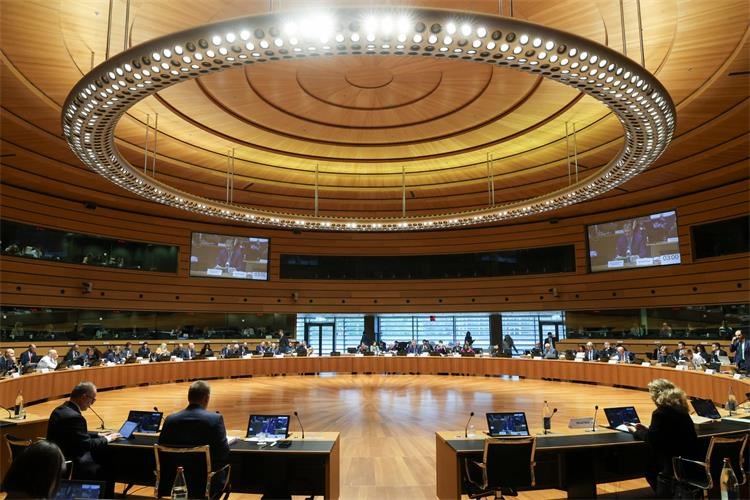
The Justice and Home Affairs Council (JHA) took place in Luxembourg on 1 and 2 October 2026
The revision of the Eurojust Regulation was discussed as part of the legislative deliberations.
Eurojust is a body which, with its expertise and experience in fighting the most serious forms of crime, makes an immeasurable contribution to the effective coordination of the competent authorities of the Member States and provides significant added value to judicial cooperation in criminal matters.
The proposed new governance structure and the introduction of a Management Board were the most discussed in the working group. The representatives of the Member States were invited to indicate which elements of the proposal are of the utmost importance for their Member States and should therefore be given priority when examining the proposal in more detail as a whole in the Council preparatory bodies.
In addition, the Presidency informed the Council about the current legislative proposals.
Of the non-legislative activities, the state of play of Russia’s war of aggression against Ukraine, i.e. the fight against impunity was presented. In addition to an overview of all previous activities undertaken since the very beginning of Russia’s armed attack against Ukraine, current activities and information were also highlighted.
Croatia supports the continued inclusion of this item on the agenda of the Council and continues to advocate for ensuring accountability for committed international crimes.
Member States’ representatives exchanged views on the protection of civil society and journalists. It was underlined that the rule of law, as set out in Article 2 of the Treaty on European Union, depends on a vibrant civic space where civil society organisations, human rights defenders and independent journalists can follow the exercise of powers and support practical enjoyment of rights without fear of intimidation or retaliation.
Media freedom and judicial independence, reporting on court proceedings in the public interest, transparent funding for civil society organisations, and EU collective action to better protect civil society actors under acute threat, such as activists, journalists and human rights defenders, were also discussed.
Opinions were also exchanged on the Conclusions on combating racism and related forms of hatred and discrimination in the EU. The fight against racism, antisemitism, as well as related aspects of hatred and discrimination, is a recurring topic on the Council agendas.
The Council approved the Conclusions aimed at responding to the damage these phenomena cause to individuals and societies and identifying priority ways to counter them. In this context, regular exchanges at political and technical level on the state of play and next steps were encouraged.
Finally, the Commission informed the Council about the Annual progress report on simplification, implementation and enforcement and the Report on the implementation of Recommendation (EU) 2023/681 on procedural rights of suspects and accused persons subject to pre-trial detention and on material detention conditions.
One of the topics under ‘Any other business’ was data retention, which was communicated to the Council by France.
Photo: Council of the EU
News