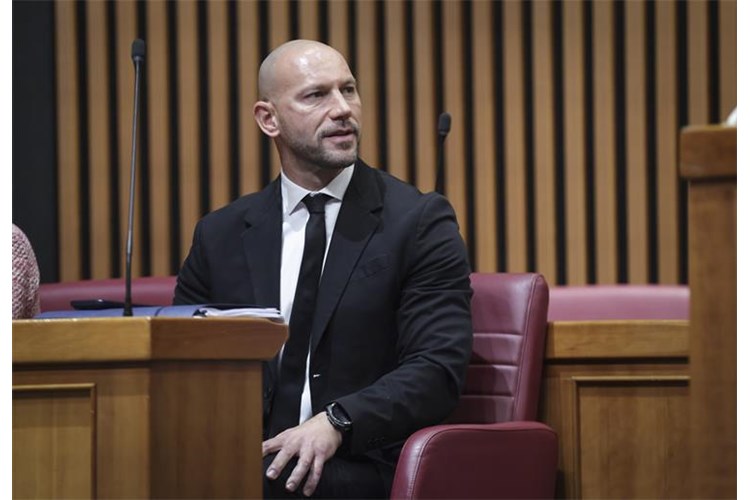
At the 10th session of the Croatian Parliament, the Minister of Justice, Public Administration and Digital Transformation Damir Habijan presented the proposals of two laws in the first reading - the Act on Amendments to the Misdemeanour Act and the Act on Amendments to the Consumer Bankruptcy Act
380 euros - maximum spot fine
At the beginning of his presentation, the Minister explained that the amendments to the Misdemeanour Act were based on the previously conducted analysis of the Faculty of Law in Zagreb, which was based on the question of whether the goal of the mandatory misdemeanour order, which was introduced in 2007, had been achieved.
With regard to the substantive amendments to the Act, the Minister mentioned e-Communication.
‘We began with certain digitisation of the entire procedure and e-Communication back in 2019 when e-Communication was introduced in civil proceedings, in 2021 it was introduced in administrative proceedings, in 2022 in criminal proceedings, and now it is being introduced in misdemeanour proceedings’, the Minister highlighted, adding that it concerned state authorities, local and regional self-government units, court experts and court interpreters, as well as lawyers and the state attorney’s offices.
Furthermore, when the defendants are local and regional self-government units or legal persons, it is important to mention that natural persons are not subject to e-Communication and it is up to them to choose whether to agree to use the system during the proceedings.
The Minister went on to explain that the main reason for the amendments to the Misdemeanour Act was to reduce the number of cases in the courts.
‘On an annual basis, we have an inflow of between 1,250,000 and 1,300,000 new cases in the courts. For a country of 3.9 million inhabitants this is a really large number, so we have been trying to find alternative ways to resolve disputes. This year we had the Mediation Act in the second reading, and we will soon talk more about arbitration as well, especially in disputes between companies that are majority-owned by the state or local and regional self-government units, as another form of alternative dispute resolution’, said the Minister.
In relation to misdemeanour proceedings, out of the total of 1,250,000 cases, almost 120,000 cases concern misdemeanour proceedings. The vast majority, that is, 60% of those misdemeanour proceedings relate to traffic offences.
‘We now have an increasing number of cameras on the roads, which should be welcomed as a good and positive action of the Ministry of the Interior, but of course, when it comes to justice, this generates a large number of new disputes’, the Minister said and presented the key novelties of the legislative amendments.
It is proposed to increase the maximum fine under a mandatory misdemeanour order from 663.61 to 1,000 euros.
Second, the maximum spot fine is increased from 265.45 to 380 euros for a natural person and the responsible person in a legal entity, with the advantage of paying half of the amount of the prescribed minimum or half of the specified fine.
Furthermore, the maximum fine for which a written or oral warning can be issued is increased from 132.72 to 300 euros.
This proposal will increase the number of misdemeanours subject to the issuance of a mandatory misdemeanour order in relation to a natural person and the responsible person in a legal entity, as well as spot fines.
The third aspect of the amendments relates to mandatory sound recording
‘As of 1 July 2027, the Courts Act as an umbrella law, as well as the Criminal Procedure Act and the Civil Procedure Act oblige us to use mandatory sound recording. Given that this will include all proceedings and the existing 1,350 courtrooms and additional 212 courtrooms when it comes to misdemeanour proceedings, technical equipment and stable national information infrastructure will be provided for over 1,500 courtrooms’, the Minister pointed out.
Funds totalling EUR 2 100 000.00 have been secured for the implementation of this Act, i.e. for the implementation of the provisions on mandatory sound recording of main hearings in misdemeanour proceedings before the courts.
‘If we look at 2022, after a mandatory misdemeanour order has been issued, a complaint was lodged in 50% of cases. In 2024, this happened in almost 84% of cases. Complaints have become an institute and an instrument for avoiding the payment of fines’, the Minister said, adding that these figures were the trigger for amendments to the Misdemeanour Act.
These amendment retain the time limit for complaint, and within that time limit 2/3 of the penalty may be paid if it is above 380 euros. However, the possibility of paying two thirds of the fine upon judgment is abolished. The intention is to encourage natural persons and responsible persons in legal entities to pay the penalty on the spot or to pay 2/3 of the penalty before lodging a complaint.
‘If we look at the fines issued under the mandatory misdemeanour order, they amounted to just over 100 million euros, and the overall reduction by the courts was almost 58%’, the Minister further noted.
The second aspect of the amendments concerns the practice of authorised prosecutors when preparing the very basis on which a mandatory misdemeanour order is issued.
‘The third aspect concerns the courts, where we need to be aware of the separation of powers and the impossibility of undue pressure on the judiciary by the executive or legislative branch. For this reason, we have focused on legislative changes and on encouraging authorised prosecutors to make sure that mandatory misdemeanour orders are prepared in such a way that acquittals or dismissals are reduced to a minimum’, concluded Minister Habijan.
Commercial courts assume jurisdiction for consumer bankruptcy proceedings
The Proposal for the Act on Amendments to the Consumer Bankruptcy Act is also based on an analysis of the previous impact of this regulation. It indicated the need for certain changes to the existing Consumer Bankruptcy Act, which has been in application since 1 January 2016.
During the presentation of the second legislative proposal, the Minister also touched on the figures of almost 1,250,000 to 1,300,000 new cases in courts, the vast majority of which are pending before municipal courts, more than a million of them, while there are about 130,000 per year in commercial courts.
‘If we compare 2020 and 2024 with the available data for 2025, there has been a steady increase in the number of cases in municipal courts and a certain stagnation of cases in commercial courts’, the Minister pointed out, adding that that was the starting point for the legislative amendments.
When the Act entered into force in 2016, consumer bankruptcy proceedings were placed under the jurisdiction of municipal courts.
‘Given the trend of the influx of cases to municipal courts and the specialisation of judicial officials in commercial courts who conduct complex corporate bankruptcy proceedings all the time, we believe that consumer bankruptcy cases should in fact find their place in commercial courts. This would reduce the duration of consumer bankruptcy proceedings’, said Minister Habijan.
Simple consumer bankruptcy procedures take an average of 234 days, i.e. the consumer bankruptcy procedure itself generally takes 358 days on average.
The aim of transferring them to commercial courts is greater expertise of people handling the procedures, as well as better dedication and faster resolution of such cases.
PHOTO: Hina
News