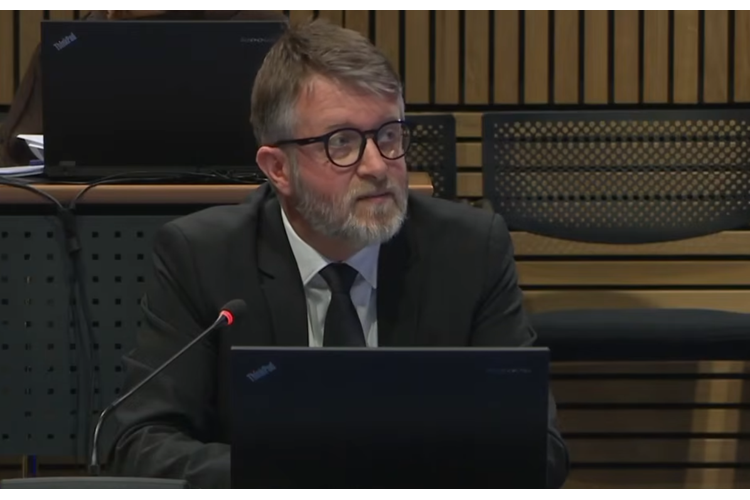
At today's session of the Government of the Republic of Croatia, State Secretary Ivan Crnčec presented the proposed amendments to the Misdemeanour Act
Presenting the proposed amendments, State Secretary Crnčec pointed out that today, for the first time, under 400,000 pending court cases were registered.
‘We are now at 385,000, but we continue to speed up procedures. This represents a major improvement from more than 1.6 million cases at the time of opening negotiations for EU accession, and 800,000 cases at the time of accession. The first set of proposed amendments focuses on misdemeanour cases, which account for 25% of the overall number of pending cases in municipal courts, and specifically on traffic offences, which account for 60% of all misdemeanours’, said State Secretary Crnčec.
The specific proposal for legislative amendments proposes to increase the maximum fine that can be imposed under a mandatory misdemeanour order from 663 to 1,000 euros.
‘These are situations where you can pay two-thirds of the fine within a certain period and then the fine is considered to have been paid in full’, the State Secretary explained.
The proposed amendments increase the maximum on-the-spot fine from 265 to 380 euros, with the advantage of paying half of the fine, and increase the maximum fine for which a written or oral warning can be issued from 133 to 300 euros. In addition, the possibility of paying two thirds of the fine upon judgment is abolished.
The legal amendments introduce e-Communication in misdemeanour proceedings, after it has been introduced in civil, criminal, commercial and administrative proceedings.
‘The Croatian judiciary is being further digitalised’, said State Secretary Crnčec.
The obliged entities of e-Communication are state bodies, local and regional self-government bodies, the State Attorney's Office, attorneys, sworn court interpreters and experts, and legal persons.
Finally, the proposed amendments introduce mandatory sound recording of the main hearing in misdemeanour cases, which should enter into force on 1 July 2027, simultaneously with the sound recording of criminal and civil litigation cases.
News