Mediation is an alternative means of dispute resolution in which a neutral third party, the mediator, assists the parties in reaching an agreement.
Such a method of dispute resolution is applicable in civil, commercial, labour, family and other disputes concerning rights freely available to the parties.
In relation to classic court proceedings, mediation often allows for a quicker, simpler and more acceptable solution to the dispute for the parties, while preserving the relationship between the parties and reducing the costs of the proceedings.
Although continuous efforts have been made in recent years to improve the mediation system, there is still considerable scope in practice for its stronger use, especially in the field of extrajudicial mediation. Citizens still do not make sufficient use of the advantages offered by mediation, which is why disputes continue to be settled in large numbers by bringing cases before the ordinary courts. One of the reasons for this situation is the lack of awareness of citizens about the possibilities and advantages of mediation as a quick and effective way of resolving disputes.
That is why the new Mediation Act further strengthens the system of peaceful dispute resolution in Croatia. The law maintains the existing quality solutions, but they are further strengthened by a more detailed arrangement of concepts that have proved useful in practice, with the aim of their wider and more effective application.
Encouraging dispute resolution through mediation
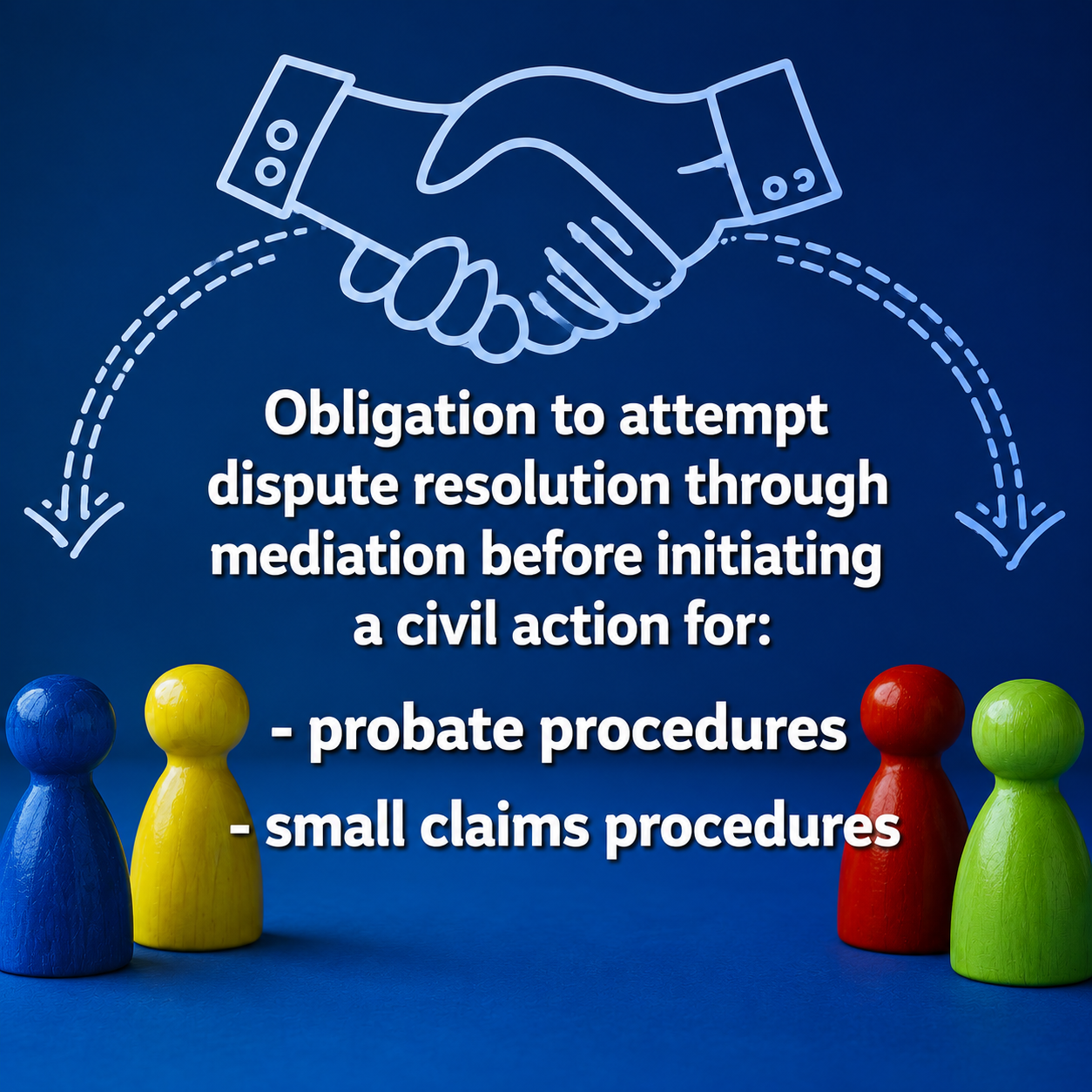
One of the important solutions introduced by the law is the obligation to attempt dispute resolution through mediation before initiating a civil action.
This obligation applies to civil actions arising from probate and small claims procedures, while employment and insurance disputes are excluded.
If a party fails to fulfil that obligation, the law provides for a cost penalty in the form of forfeiture of the right to reimbursement of the cost of civil proceedings regardless of the outcome of the dispute, in the event that the action is nevertheless brought before a court.
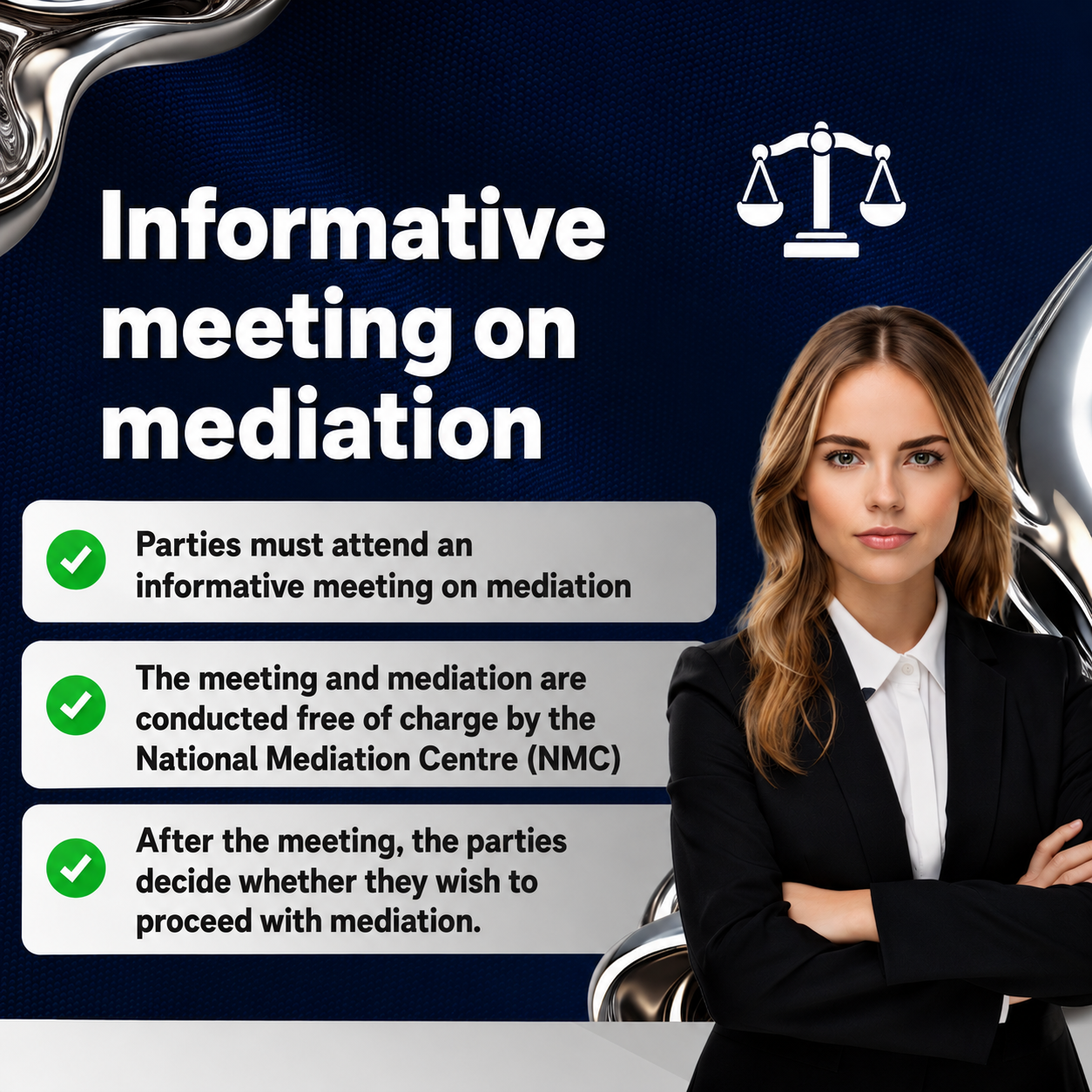
In order to enable the parties to become acquainted with the possibilities of mediation, the law regulates in detail the informatve meeting on mediation, which is a way of fulfilling the obligation to try to resolve the dispute peacefully.
An additional incentive to use mediation is the exemption from court fees in the case of unsuccessfully completed mediation, in situations where the parties actively participated at least in the first mediation meeting , and the procedure ended without reaching an agreement.
National Mediation Centre
An important role in the mediation system is played by the Centre for Peaceful Dispute Resolution, which was established in July 2023 pursuant to the Act on the Peaceful Resolution of Disputes (OG 67/23).
The Centre currently carries out a number of tasks relevant to the development of a peaceful dispute resolution system, including:
- keeping the Register of Mediators through administrative procedures,
- granting and revoking consent to mediation institutions,
- granting consent for training programmes for individual types of peaceful dispute resolution,
- collecting information on amicable dispute resolution procedures,
- fostering the development of a culture of peaceful dispute resolution.
According to the current legal framework, the Centre carries out mediation only exceptionally, i.e. in situations where the procedure cannot be carried out by another mediation institution.
The new Mediation Act further strengthens its role, and the Centre continues to act as the National Mediation Centre. In this role, the Centre will conduct information sessions on mediation and mediation procedures free of charge, further facilitating citizens’ access to this method of dispute resolution.
Territorial coverage
In order to make the system accessible to all citizens, not just those in large centres, mediation is carried out by an extensive network of offices. In addition to the registered seat of the National Mediation Centre in Zagreb, regional centres in Split, Rijeka and Osijek are also operational. The decentralisation ensures that the parties can access information sessions and mediation procedures in their region, thus eliminating the need for time and cost consuming travel, which often presented an obstacle in court proceedings.
Possibility of online mediation
Following modern technological trends, the new system makes it possible to complete the entire mediation process remotely (online). By using secure video-link systems, parties and mediators can communicate in real time without the need for physical presence in the same room.
- Flexibility: The procedure can be carried out from any location (home, office), which is ideal for disputes where the parties are located in different cities or even countries.
- Time savings: Online meetings are easier to schedule and run faster, which further emphasizes mediation as the fastest way to a legally binding agreement.
- Less stress: Participation from a familiar environment often helps parties stay calmer and more focused on problem-solving.
Strengthening professional standards and mediation systems
The Act further regulates the requirements for acquiring the status of mediator, to ensure a high level of expertise of persons conducting mediation procedures. It also provides for the Code of Ethics for Mediators, which lays down professional standards and rules of conduct for mediators.
Certificates are issued in order to establish the fulfillment or non-fulfilment of the obligation to attempt to resolve a dispute through mediation, as well as to clearly determine the duration of the information meeting on mediation and the mediation itself, and thus secure the legal position of all parties to the dispute.
The new Mediation Act further strengthens the system of peaceful dispute resolution in Croatia, encourages wider use of mediation and provides citizens and the economy with a faster and more efficient way of resolving disputes.
Contacts:
National Mediation Centre
Savska cesta 62, 10 000 Zagreb
Phone: +38516161330
Rijeka Branch Office
Splitska 2, 51 000 Rijeka
Phone: +38551362200
Mob: +385952050056
Split Branch Office
Ruđera Boškovića 15, 21 000 Split
Phone: +38521612964
Mob: +385952050059
Osijek Branch Office
Vukovarska cesta 31, 31 000 Osijek
Phone: +38531212067
Mob: +385952050055

