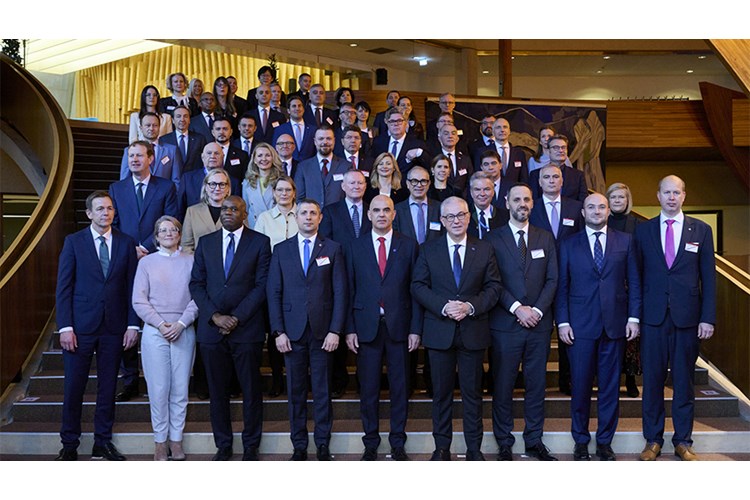
On Wednesday, 10 December, State Secretary Ivan Crnčec attended an informal ministerial conference at the Council of Europe headquarters in Strasbourg to discuss migration-related issues and the European Convention on Human Rights
The conference brought together ministers from 46 member states, who presented their views on these topics.
‘Today's dialogue reflects our shared willingness to ensure that the European Convention on Human Rights remains an equally strong and relevant foundation of the European legal architecture even in the significantly altered conditions since its adoption’, State Secretary Crnčec started his address, stressing that, for Croatia, the Convention remains a central instrument for protecting the dignity of each individual.
Referring to the changed security and migration environment in which EU Member States operate today, the State Secretary drew attention to the importance of a sincere, constructive and informed dialogue on how current case law in certain areas - such as the expulsion of foreigners convicted of serious crimes - affects the ability of states to fulfil their fundamental obligation to protect the security of citizens and the stability of democratic orders.
It is therefore not about opposing security and rights, but about the need for their responsible and contemporary alignment.
Croatia, as the country that manages the longest external land border of the European Union, understands the complexity of these challenges, since despite the decline in the number of illegal border crossings this year, it continues to face smuggling networks and attempts to instrumentalise migration in a broader geopolitical context on a daily basis.
‘Our task is to find a balance between managing these risks effectively and fully complying with international commitments - a balance that must be realistic, operational and applicable. In particular, we underline the importance of the principles of subsidiarity and trust in national institutions, as well as the need for states to retain the possibility to take legitimate and proportionate measures, including the expulsion of persons convicted of serious crimes, in full respect of their procedural and substantive rights. Such an approach does not weaken the Convention - on the contrary, it strengthens its resilience and credibility’, concluded State Secretary Crnčec.
The conference in Strasbourg represents an important stage on the path to the adoption of a declaration on migration in Chișinău (Moldova) next year.
PHOTO: Council of Europe
News