
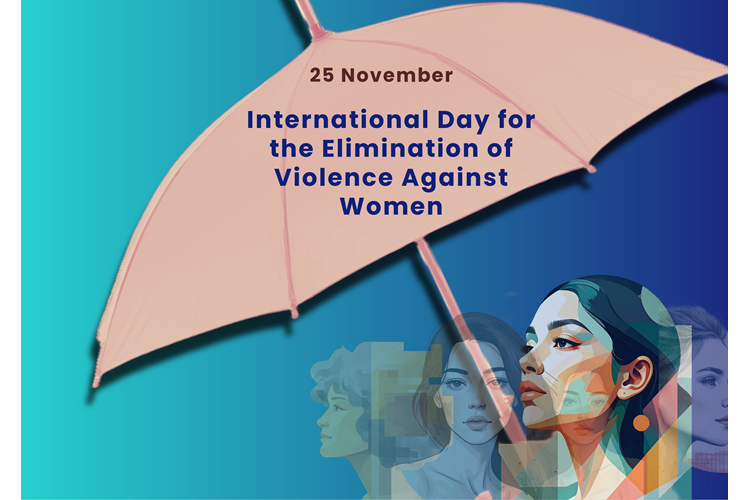
25 November is commemorated worldwide as the International Day for the Elimination of Violence against Women, in memory of sisters Mirabal, political activists who were executed by the dictatorial regime in the Dominican Republic in 1960. Their sacrifice is a reminder that violence against women is not a private tragedy, but a social problem that requires a clear and immediate response.
Legislative measures to combat violence against women
In the current term so far, the Government has taken a number of legislative measures to strengthen the criminal and misdemeanour law policy for the protection of women and protection from domestic violence. Over the past five years, the legislative framework has been systematically improved through three rounds of legislative amendments, with the latest package entering into force in 2024.
The Act on Amendments to the Criminal Code, the Act on Amendments to the Criminal Procedure Act and the Act on Amendments to the Protection against Domestic Violence Act were adopted.
A new criminal offence of aggravated murder of a female person, known as femicide, was introduced in the Criminal Code, which is not time-barred and for which a term of imprisonment of ten years to long-term imprisonment is envisaged.
Femicide is established if the offence is committed against a close person, a person previously abused by the offender, a vulnerable person, a person in a relationship of subordination or dependence, in circumstances of sexual violence or because of a relationship that places women in an unequal position.
From the introduction of femicide into the Criminal Code to September 2025, seven indictments were confirmed, six of which for attempted femicide, and four judgements were delivered, three of which for attempted femicide.
The penalties for rape and serious sexual offences have also been increased, and the crime of sexual harassment has been redefined and is now prosecuted exclusively as a criminal offence.
The obligation to take into account risk factors for the repetition of violence and the results of the previous assessment of the needs of the victim has been introduced in the Criminal Procedure Act, as well as the right of the victim to appeal against a decision on precautionary measures.
In the event of violation of a precautionary measure, it is envisaged that the accused be arrested and that pre-trial detention be ordered within 24 hours.
In the Protection against Domestic Violence Act, stricter penalties, pre-trial detention in case of violation of precautionary measures, a minimum distance of 100 meters in the protective measure of the prohibition of approaching, harassment or stalking the victim were introduced, and the rights of victims in misdemeanour proceedings were harmonised with those in criminal proceedings.
Strengthening the support system for victims of violence
The victim and witness support system in Croatia is unique in Europe as it connects institutional support and the civilian sector.
The victim and witness support departments currently operate at 14 county courts, the Municipal Court in Split and the Municipal Criminal Court in Zagreb, while the department at the County Court in Dubrovnik is in preparation, which will cover the entire territory of Croatia.
Departments provide support to around 3,300 victims and witnesses each year.
The Ministry of Justice, Public Administration and Digital Transformation initiated the establishment and financing of the Network of Support and Cooperation for Victims and Witnesses of Crime, which operates in 17 counties and consists of ten civil society organizations coordinated by the Women's Room - Centre for Victims of Sexual Violence. The Network's programme provides victims with institutional accompaniment, information on rights, legal and psychological assistance, and emotional and practical support. Since 2017, over €2.5 million has been allocated to the Network, and together with the National Call Centre 116 006 a total of over €2.8 million has been provided.
The first step is a call
The first step is to seek support from the National Call Centre for Victims of Crime, which was established in 2013 in cooperation with the Victim and Witness Support Service Croatia, the Ministry of Justice and the UNDP. Croatia thus became the fifth European country with the unique helpline 116 006, available 24/7, which is toll-free and anonymous for all victims and witnesses. The helpline provides victims and witnesses with information, emotional and psychological support, and legal and practical assistance.
Femicide Watch, established in 2017, continuously monitors and analyses cases of femicide and gender-based violence in Croatia.
Croatia continuously invests in the training of judges, state attorneys and police officers through the Judicial Academy, and the specialisation of judges for work on domestic violence cases has been prescribed in the Courts Act.
All these measures and programmes demonstrate the commitment of the Government and the Ministry to protecting women's rights and combating gender-based violence in a systematic and efficient manner.
Together against violence - any support counts
Change begins with us and our responsibility to disclose violence. Every complaint, every call to the National Call Centre and every kind of support to victims are a step forward towards creating a safe society. Joint efforts of the government institutions, the civil sector and each of us individuals are needed to build a society in which respect, security and equality are a reality rather than just an ideal. Violence against women must not be tolerated and each of us can contribute to its suppression.